The School of Joy
A method where mindfulness with children and youth becomes a practice of joy
Ongoing since 2024 · Berizky, Mykolaiv region · 200+ children
Why joy
Childhood happens once, and for these children it is happening now, during a war. It can’t wait for the world to be fixed.
Joy can be learned, the way reading is learned. And in Ukraine we often deny ourselves joy because others are suffering more. Going without joy eases no one’s pain. It only adds one more loss.
Joy isn’t the absence of war. It’s a capacity.
May 2022 · An idea in a notebook
The first weeks of the full-scale invasion. I wrote down an idea: a school under the open sky.
It came from two very different teachers: the Dalai Lama, who says joy is a quality of the heart we can train, and Vasyl Sukhomlynsky, a Ukrainian educator who taught children outdoors, under the trees, in the 1950s.
Then the idea waited. For two years it had a shape but no place.
Summer 2024 · Berizky
The place came through Laura Pauli, who became the project’s godmother. With her support, The School of Joy arrived at Berizky Artistic Lyceum: a boarding school for children aged 3 to 18. Some are orphans or deprived of parental care and live there all year; others go home in the evening. They share the same rooms.
The teachers were tired. Salaries were low. And there was no psychologist. Not a vacant position: no position at all.
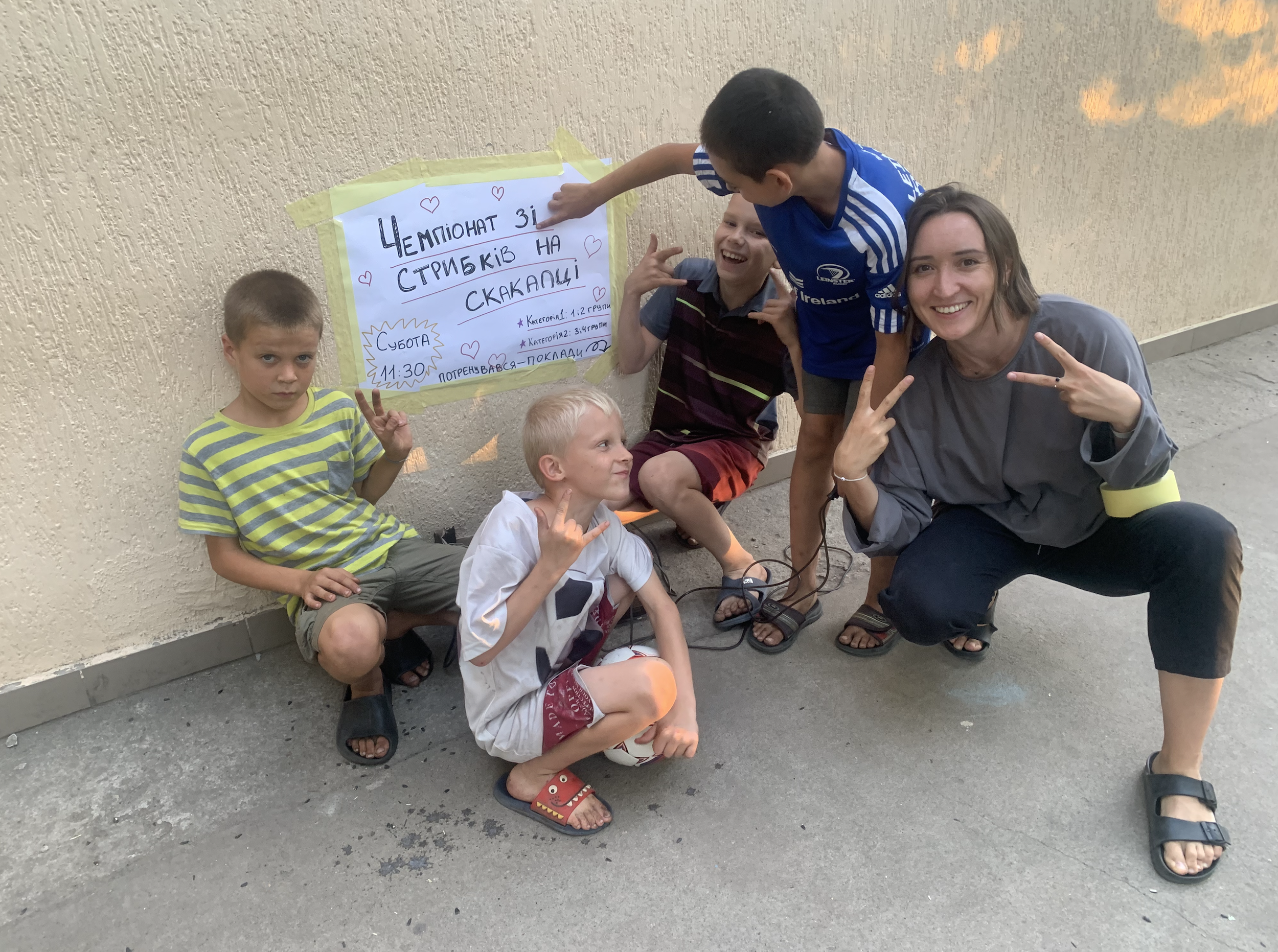
170 children came to the first camp. I didn’t start by talking about emotions. I started with their bodies, and with a jump rope contest with prizes. I’ll be honest: that’s the crudest kind of motivation there is. It worked.
On the first day, I asked the children to say something kind about another child, out loud. Total silence. Everyone looked at their feet. By the end of the week, they were arguing over who got to speak next. Nothing in their lives had changed. What had changed was the state they walked into the room in.
2024–2025 · Coming back every month
After the camp, I kept coming back: three days a month, all year.
I don’t want these children to depend on me. So the rhythm is deliberate: enough presence for the practice to hold, enough absence for it to become theirs. Each month, the first thing I check is what they did without me.
The jump rope is now simply a practice they love. No contest, no prizes, and I’m no longer needed for it.
Summer 2025 · Going deeper
130 children came, many of them for a second year. Their bodies already knew the rhythm, so we could go further: longer meditations, yoga, quieter work, and conversations about whatever the children brought that day.
2026 · A room of our own
For two years we practiced in a very old room. That matters: a worn, noisy, badly lit room regulates no one.
This year the renovation of our own room at Berizky is finished. What goes inside, and how it will work, we will design together with the children. The aim is a room that stays open and belongs to them, a place they choose to come to on their own.
The School of Joy is my main project, and it continues.
The method · Four levels of joy
The method moves from the body upward. We never start at the top: a body on alert can’t hear an invitation to gratitude.
Body: regulation first. Jump rope, breathing games, yoga, dance, body scan and relaxation in the evening.
Mind: attention and focus, naming emotions, mindful listening, mental training and meditation.
Energy: creative expression, where children become authors rather than participants. Drawing, instruments, body percussion, painting our dreams on the ground outside, and singing, a very Ukrainian way of regulating together.
Soul: what stays after the activity ends. Gratitude, loving-kindness, three good things each evening, saying kind things about others out loud.
Read your state, not your symptoms.
Children today know a lot of clinical words: I’m anxious, I’m having a panic attack, I’m traumatized. Labels like these stick and become who you are. So the children learn to say: my body is on alert, right now. A state can be noticed, and a state can change. They learn this language faster than adults.
Distraction is half the exercise.
I teach attention in four moments, with a hand gesture: focus, distraction, noticing, beginning again. What children remember is the third one. Getting distracted isn’t failing. It’s part of the training.
Every child has their own door into joy.
For one it’s movement, for another silence, for a third drawing or singing. My work isn’t to find the right practice. It’s to offer enough doors that each child finds theirs.
Roots
The Book of Joy by the Dalai Lama and Desmond Tutu · nervous system literacy: Siegel, Porges, Dana, Levine, Winnicott · Self-Determination Theory: Deci & Ryan · Sir Ken Robinson’s Element
How to help
Every month, I travel from Kyiv to Berizky in Mykolaiv region, and the children know I’ll be back. That rhythm is what holds The School of Joy together.
Last December, driving home from a monthly visit, I was in a car accident. I was lucky. The car wasn’t. See the car → [photo link coming soon] Since then, every visit depends on borrowing a car, which isn’t easy in Kyiv right now, and no buses go to Berizky. Each trip runs on borrowed time.
To keep coming back every month, The School of Joy needs a car. Our goal is $15,000 for a reliable used SUV. It needs to handle Ukrainian roads (some barely roads at all), stay safe in winter, and be easy on fuel, because fuel shortages happen.
Help us get back on the road → [donation link coming soon]
[The School of Joy film: coming soon]
In their words
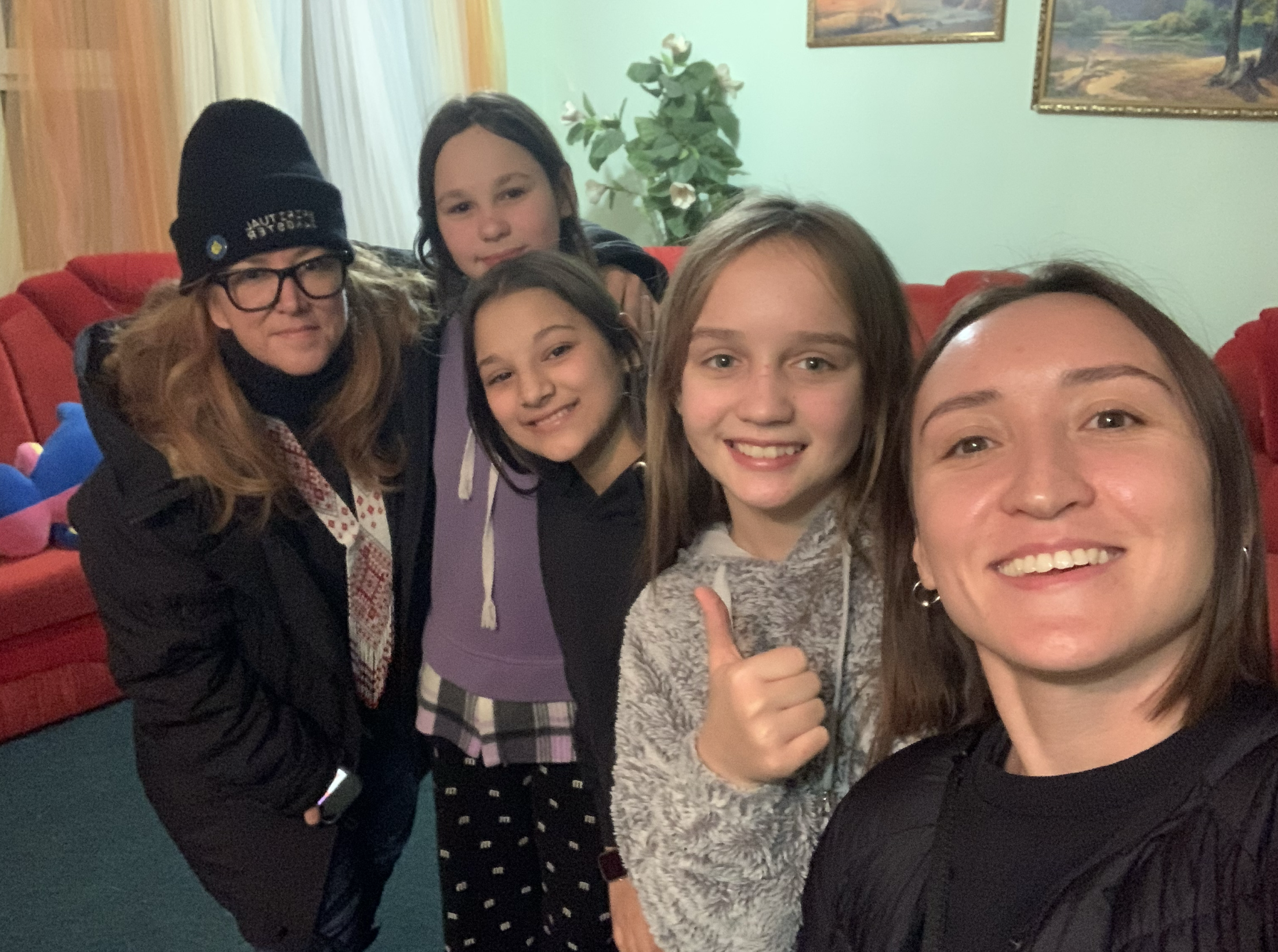
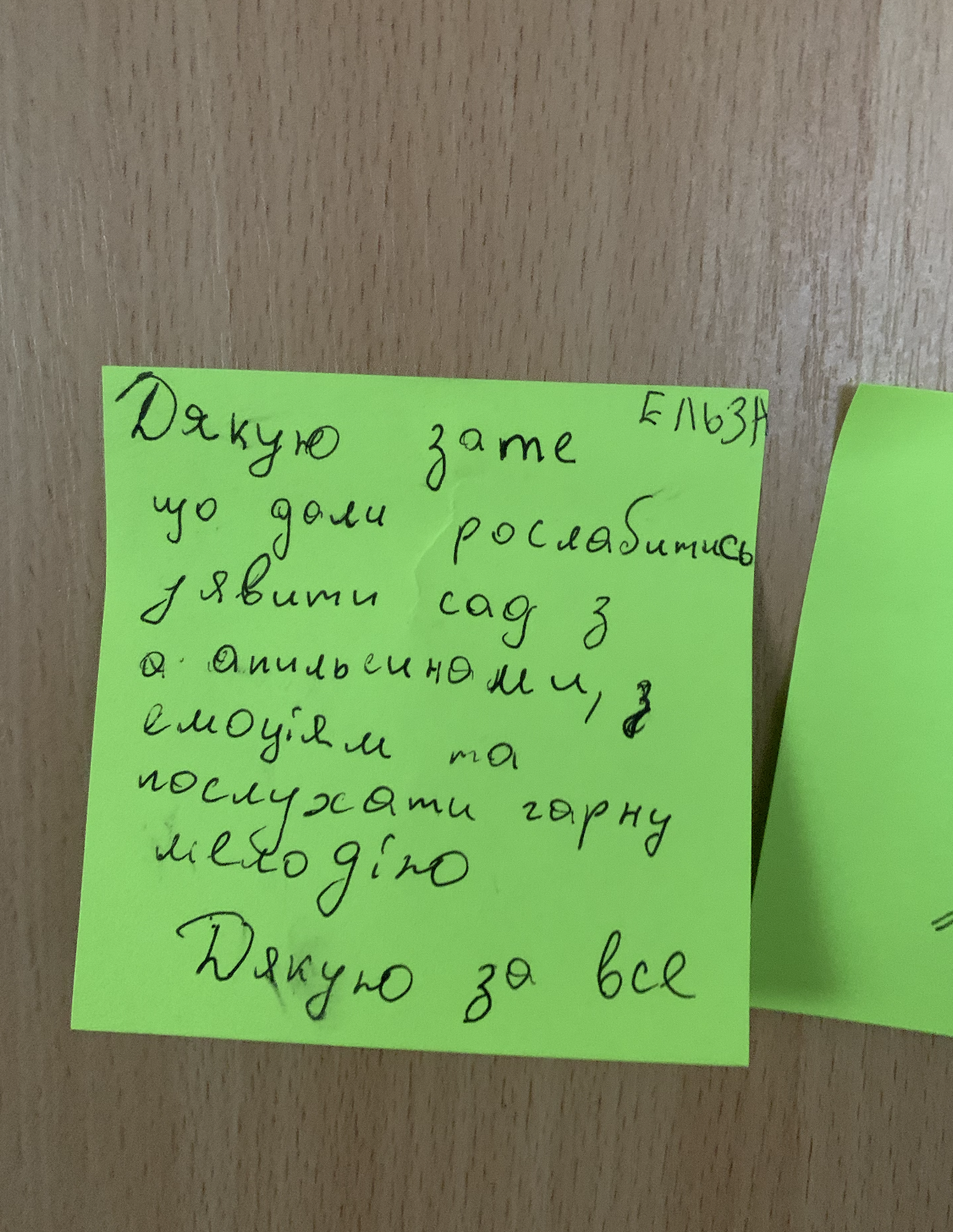
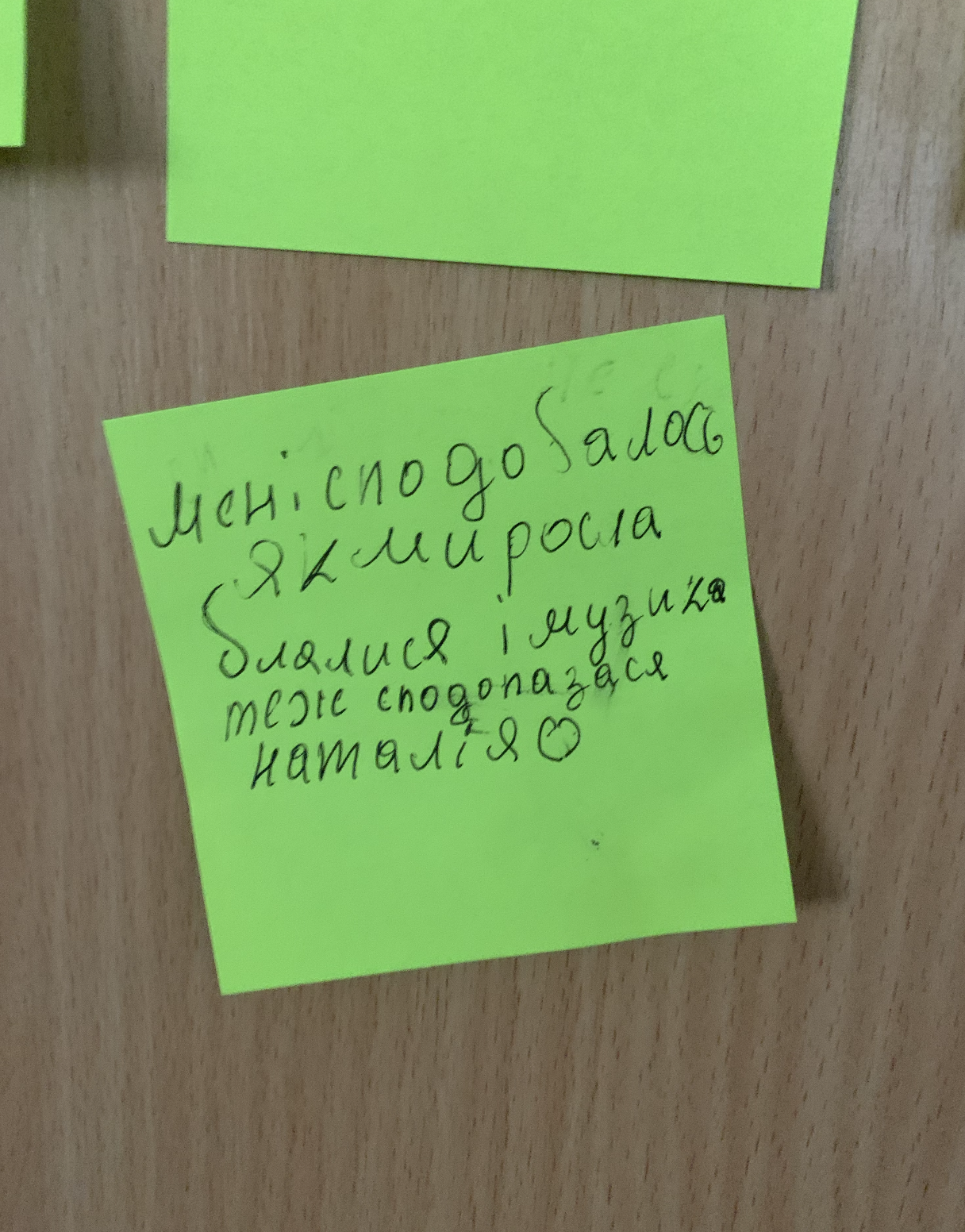
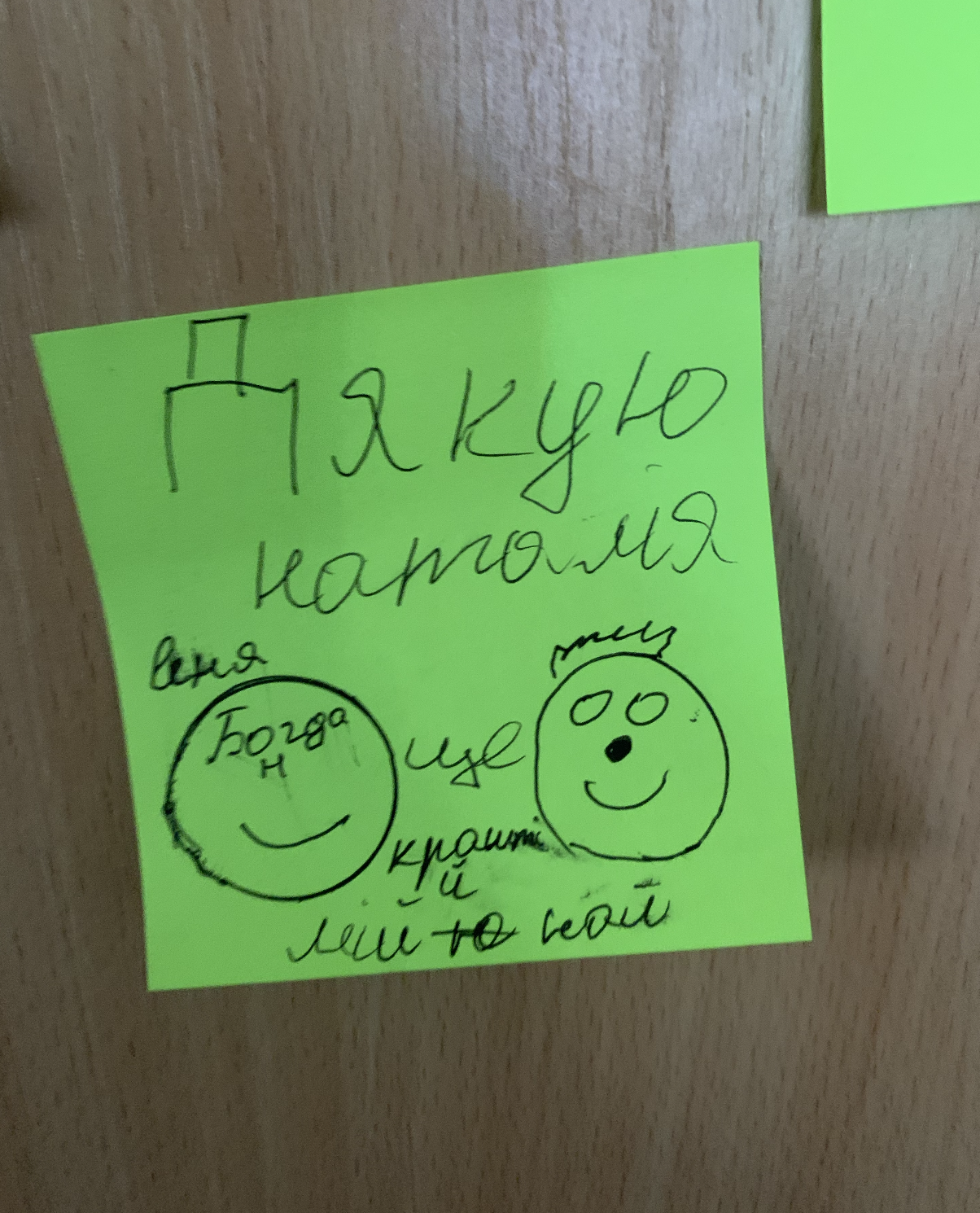
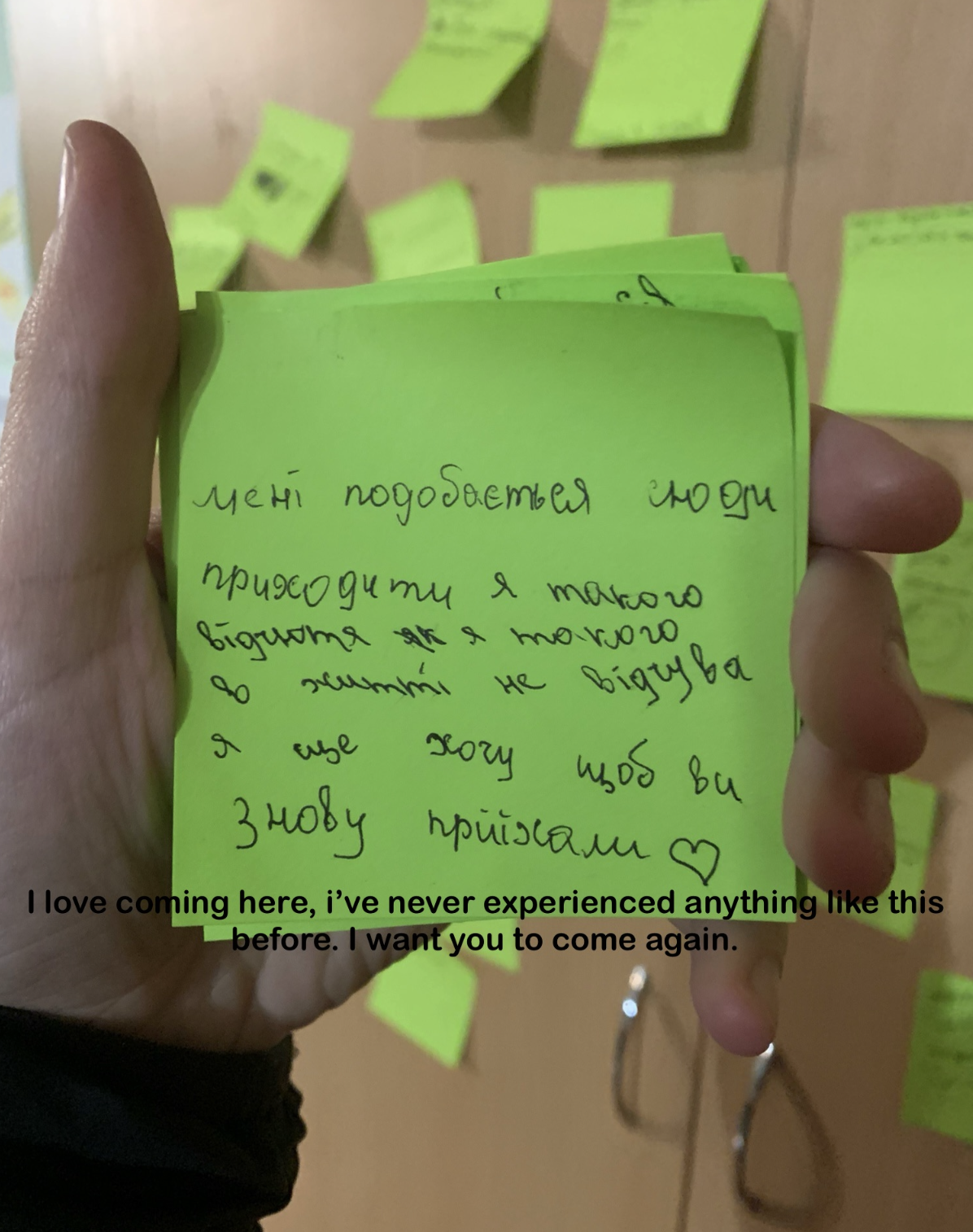
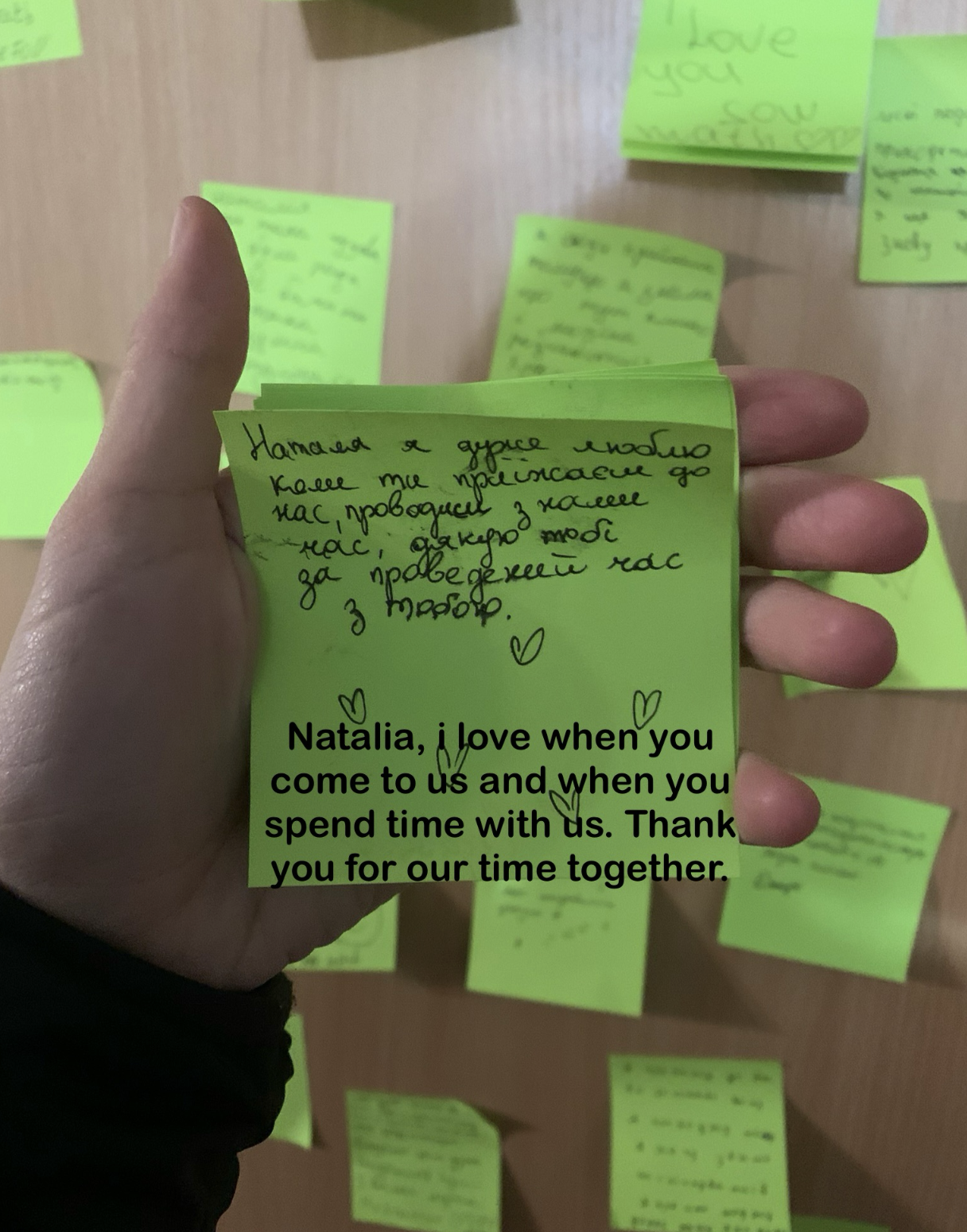
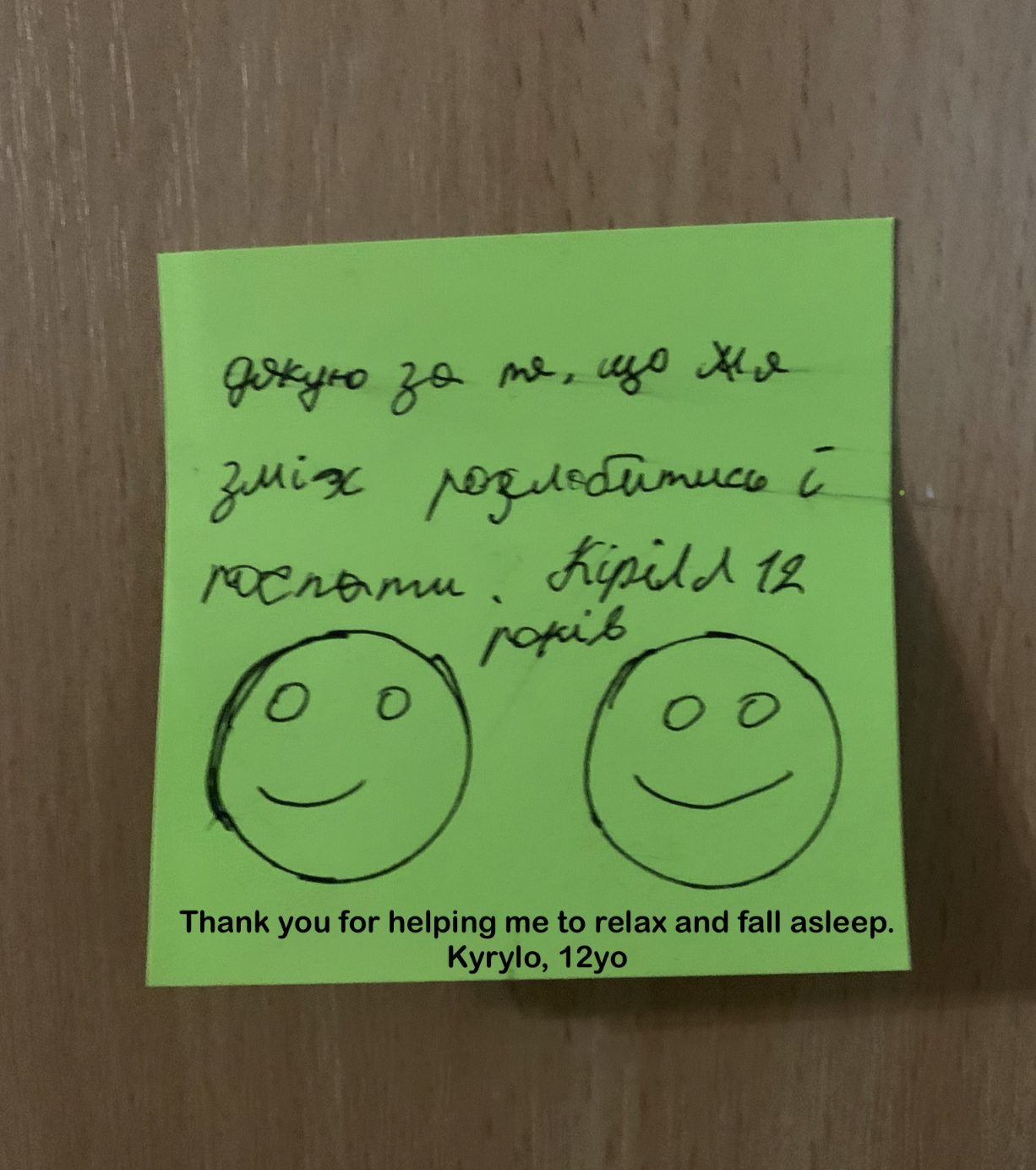
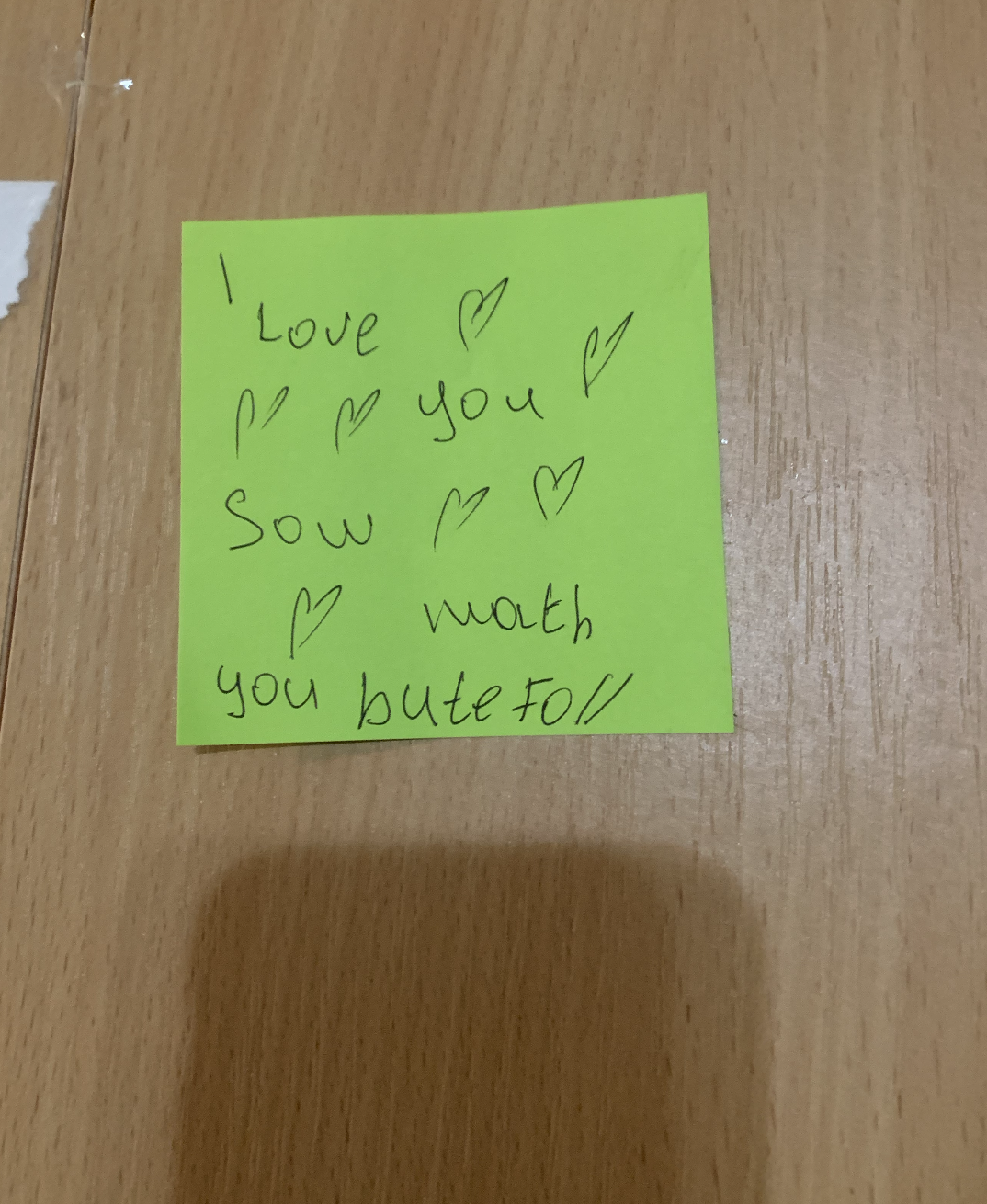
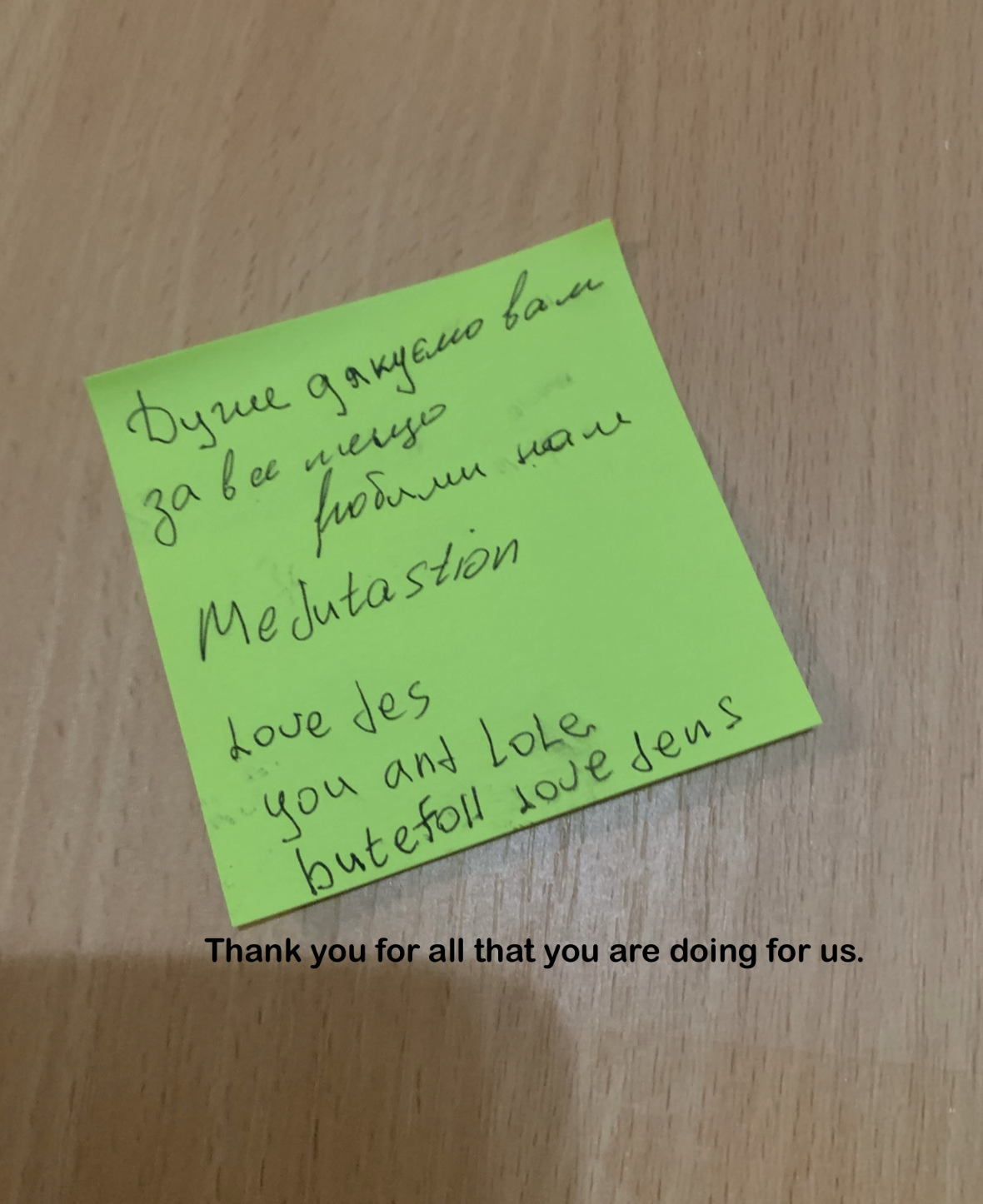
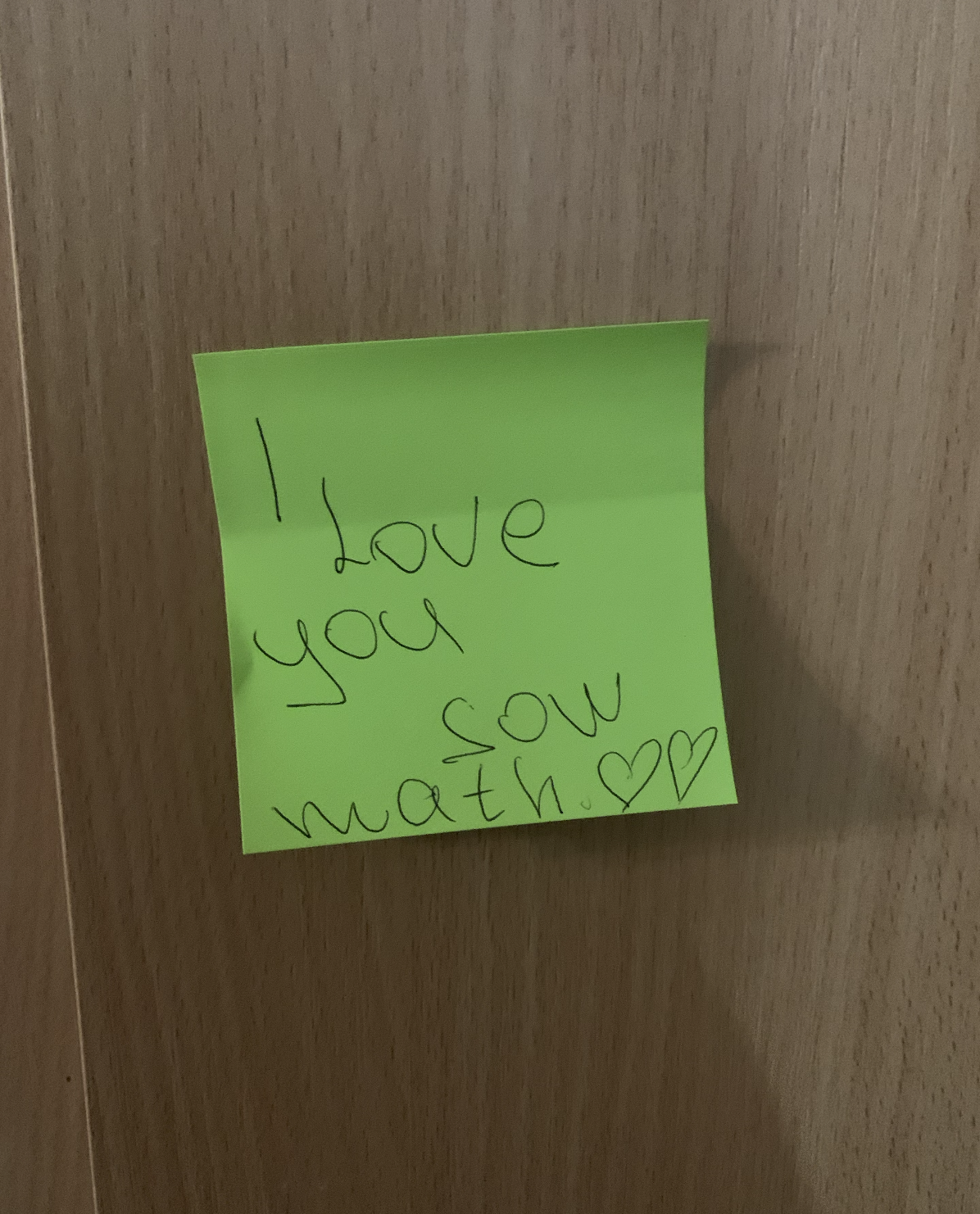
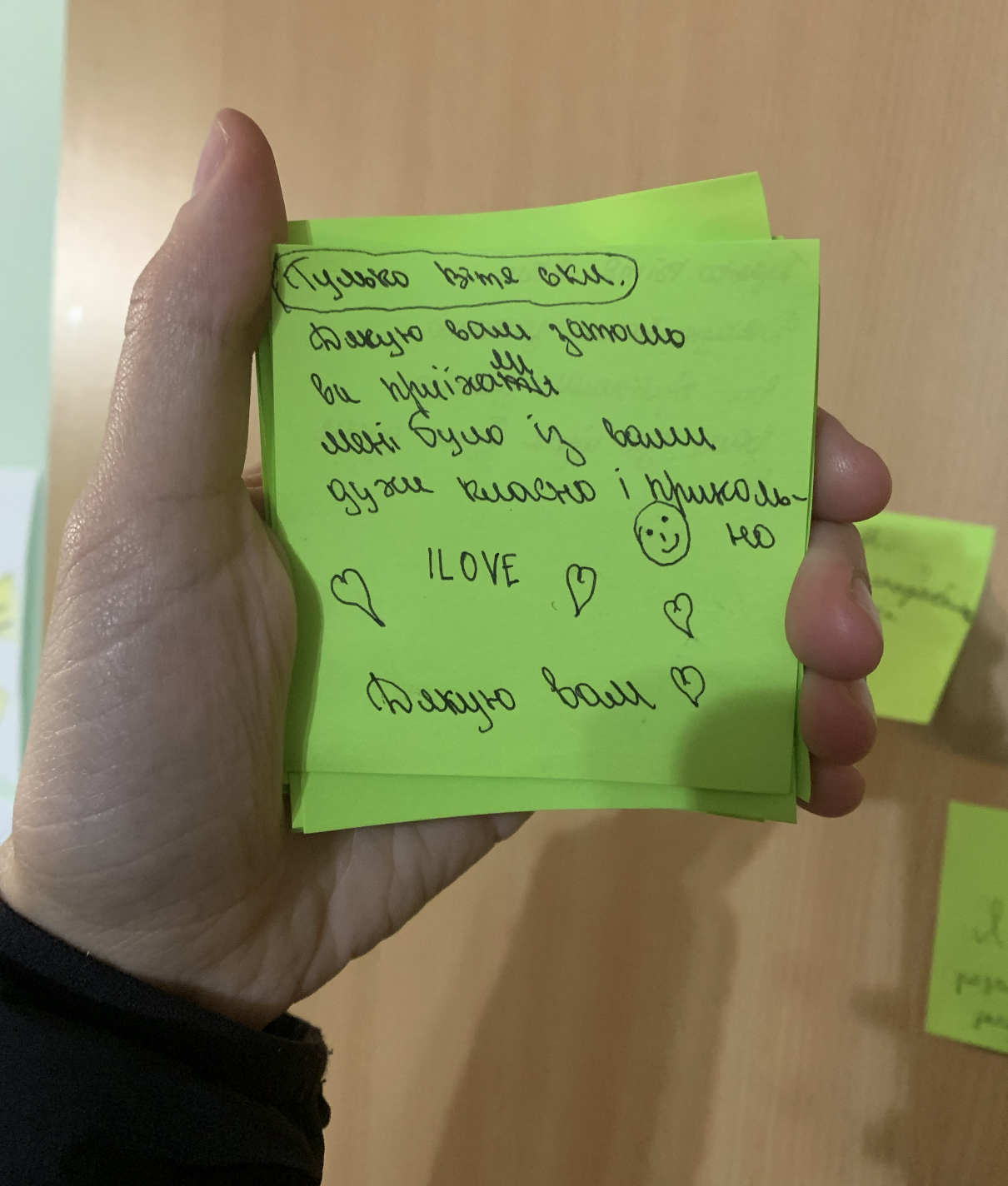
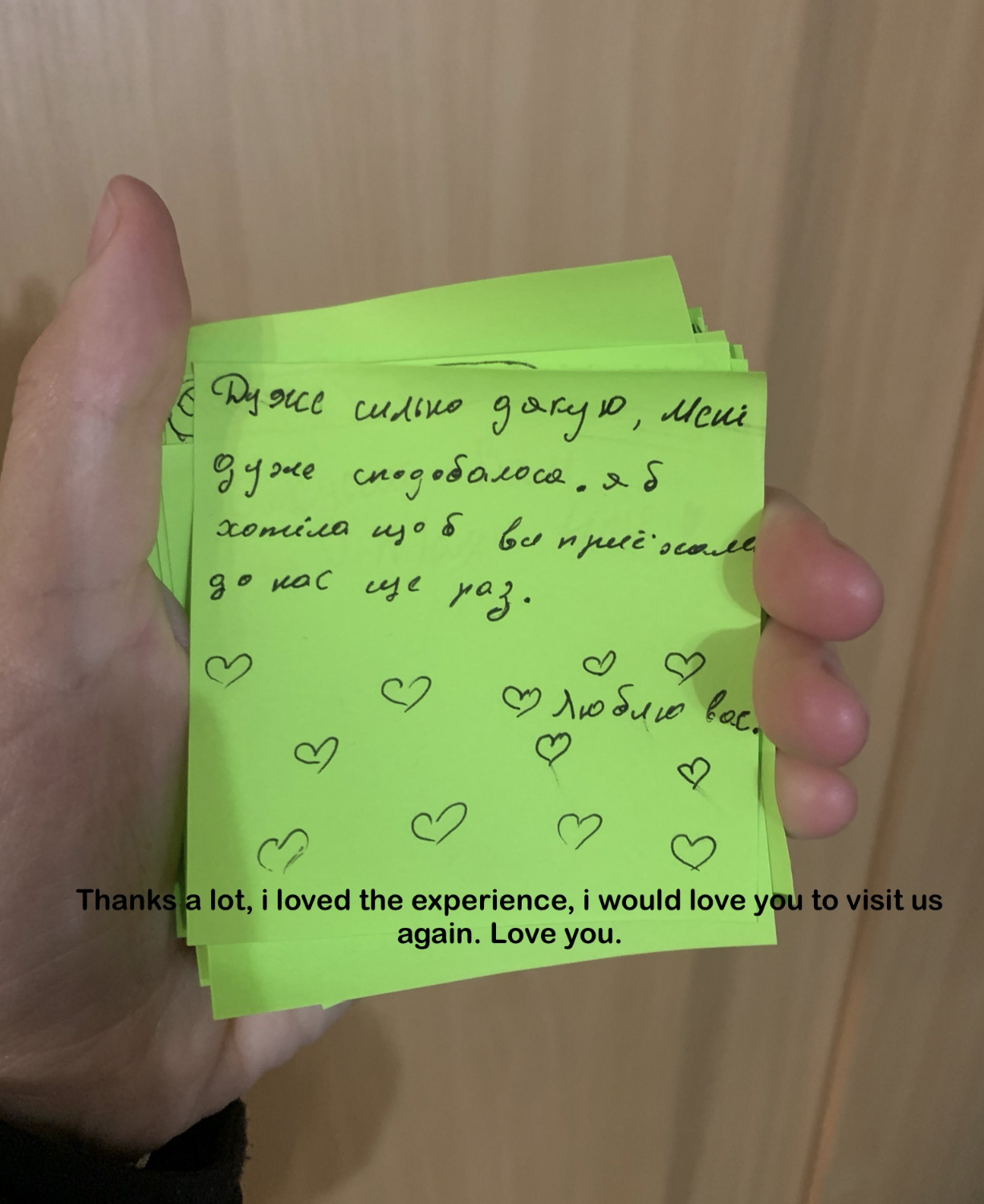
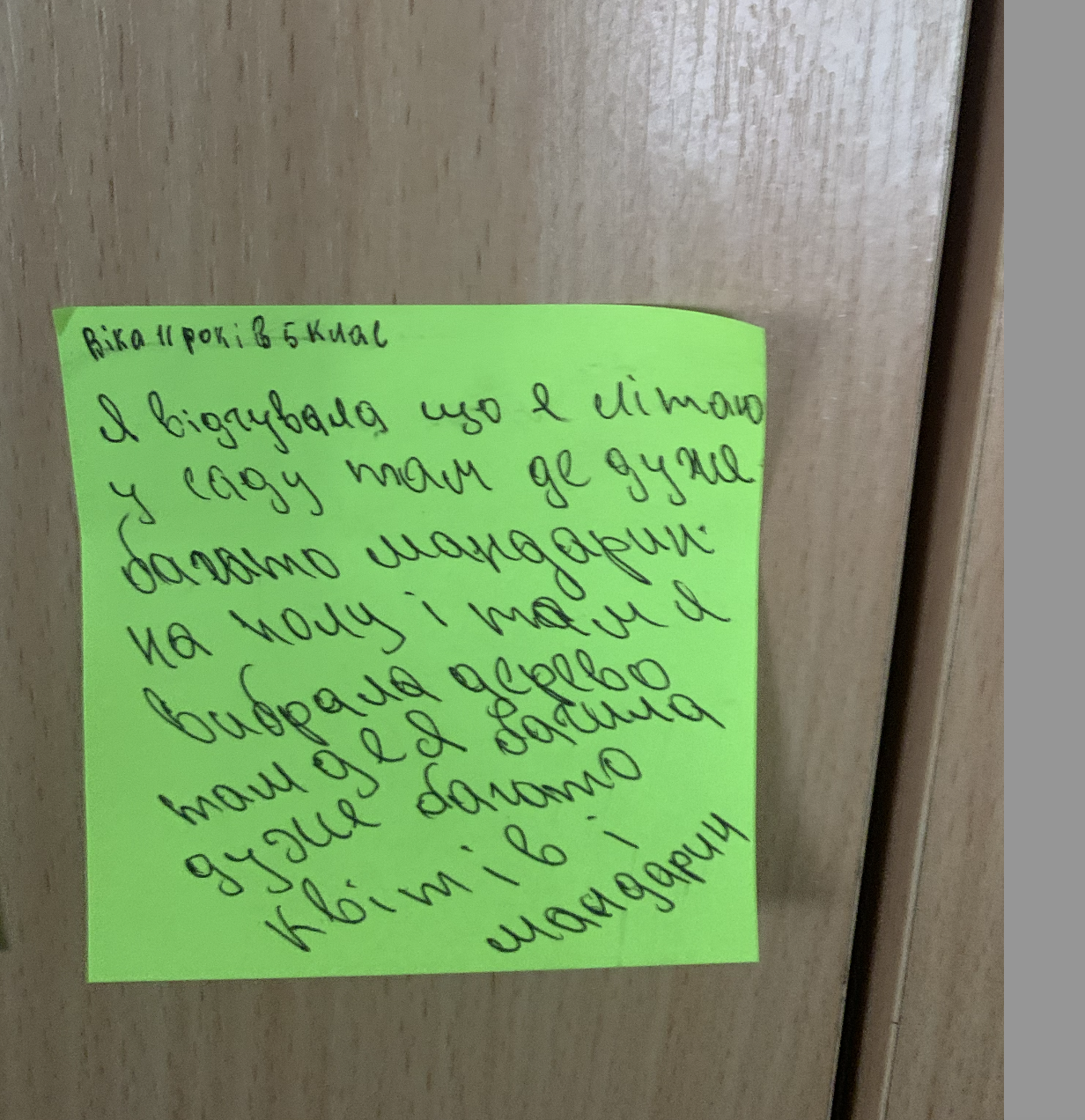
After each visit, the children leave us notes. Here are some of them, translated from Ukrainian. Below: Laura and the girls, right after a meditation session.