Tsikava Hatka: from idea to impact in 3 days
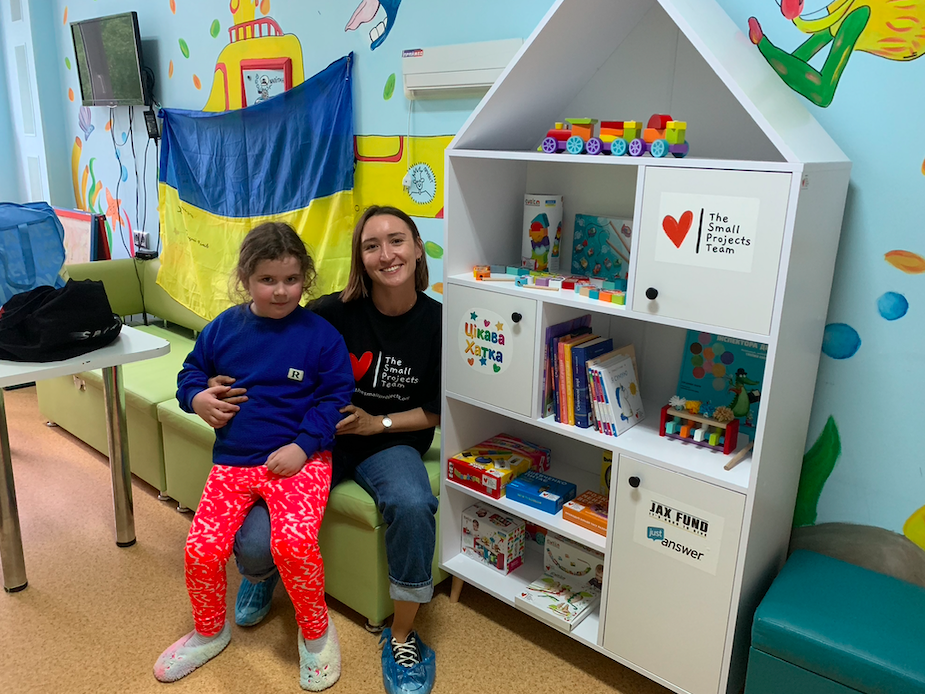
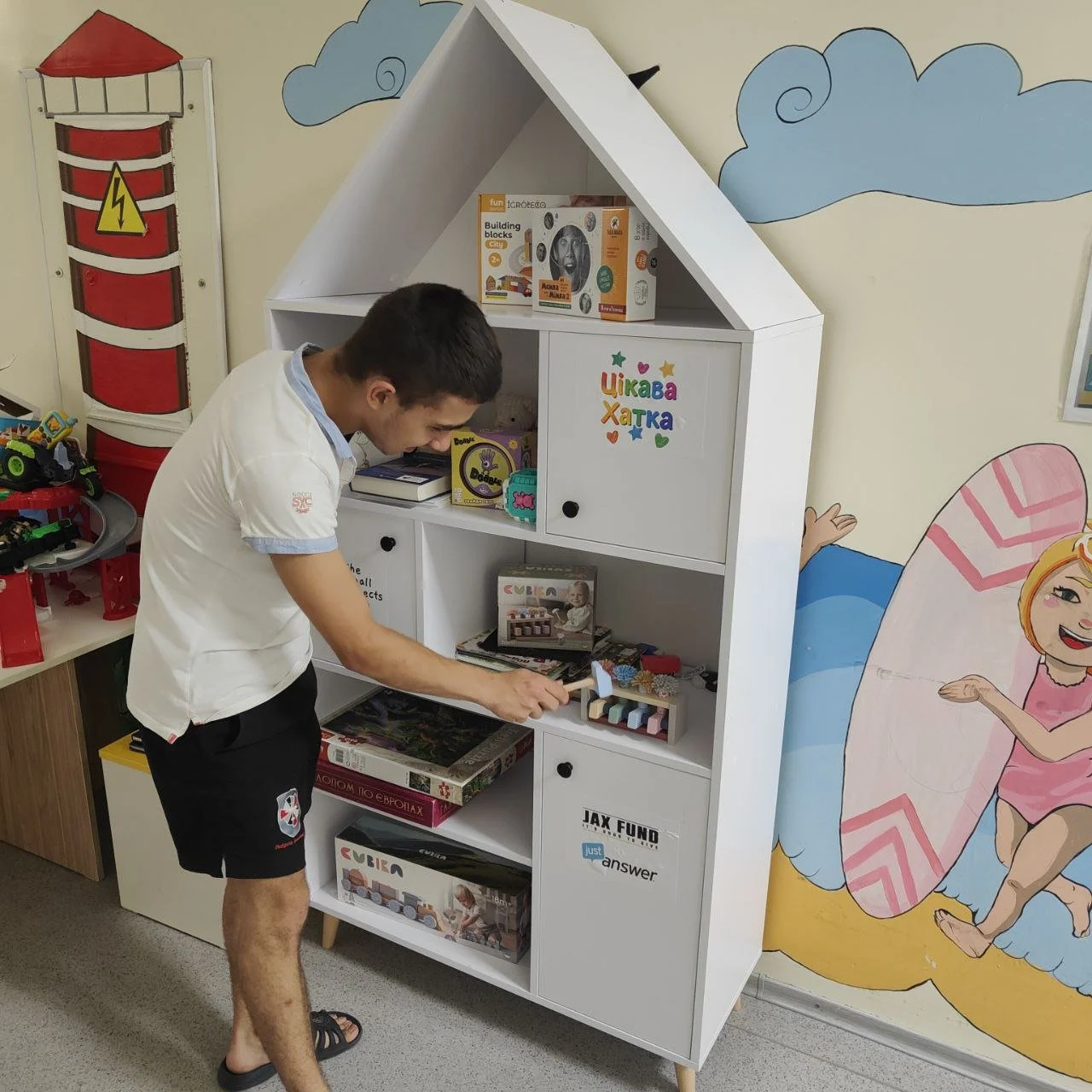
Our very first Tsikava Hatka. Installed with the help of this bright young lady who took the role of “chief organizer” very seriously. A small moment that still feels big.
Some projects take months to unfold. And some happen because the need is clear, the timing is right, and the team simply decides: let’s do it.
Tsikava Hatka was exactly that kind of project.
From the moment we finalized the idea to installing the first little house in a hospital, only three days passed. And honestly — that speed says more about The Small Projects Team than anything else. Charles and Magda moved with their usual mix of clarity, kindness, and “let’s just make it happen.” I was proud to support the project on the ground, but the momentum came from them.
Where the idea began
It started with something simple: “What if we brought books and toys to pediatric hospitals?”
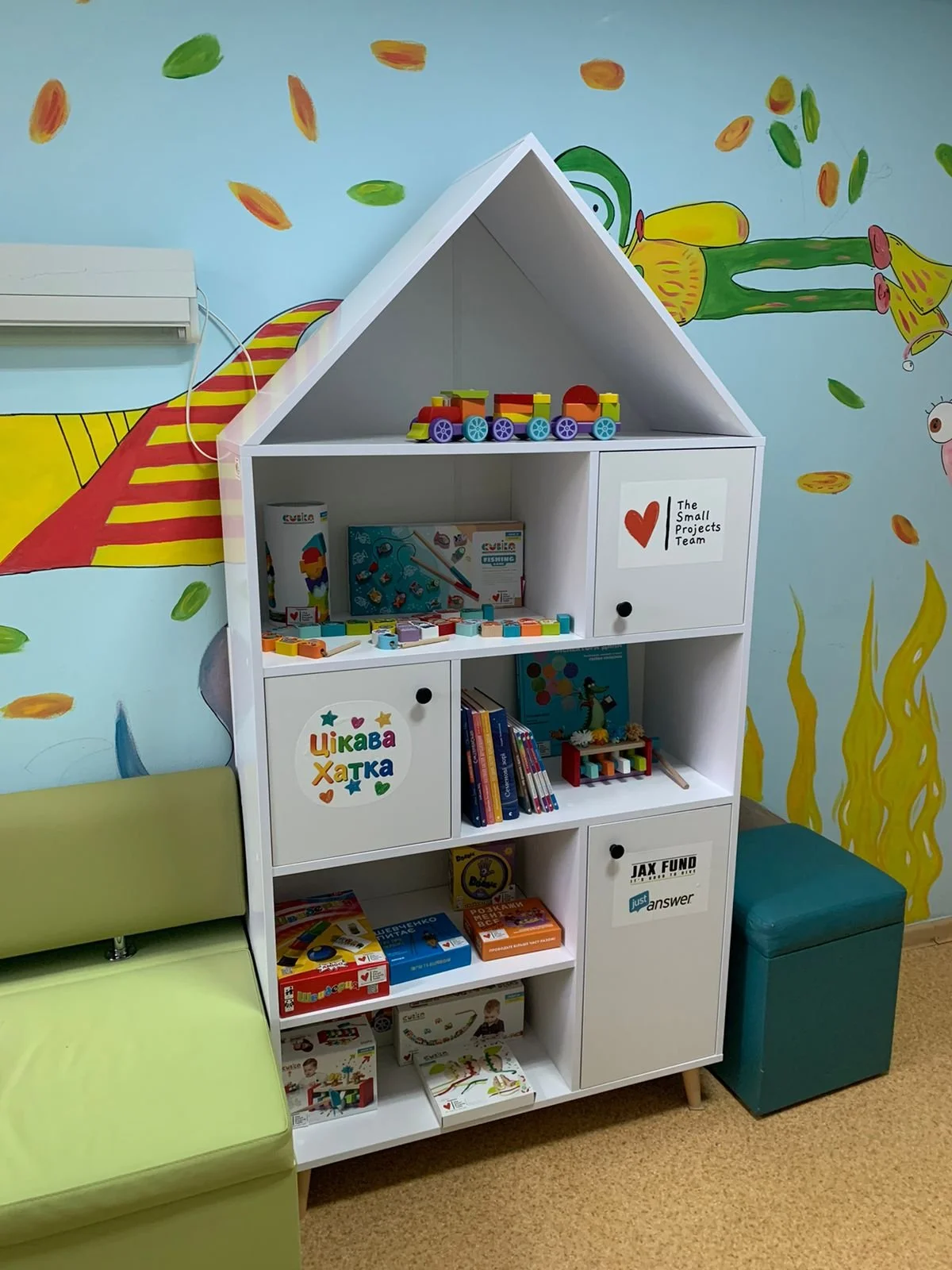
Then we found the Hatka shelves — beautiful Ukrainian-made wooden houses — and suddenly we weren’t just talking about shelves anymore. We were imagining a small, child-sized space that feels warm, gentle, and safe.
“Tsikava Hatka” means Curious House in Ukrainian.
And that’s exactly what we wanted children to feel: curiosity, comfort, and a sense of home inside a hospital. Not decoration. Not distraction. But a little pocket of safety.
The “secret purpose” behind the toys
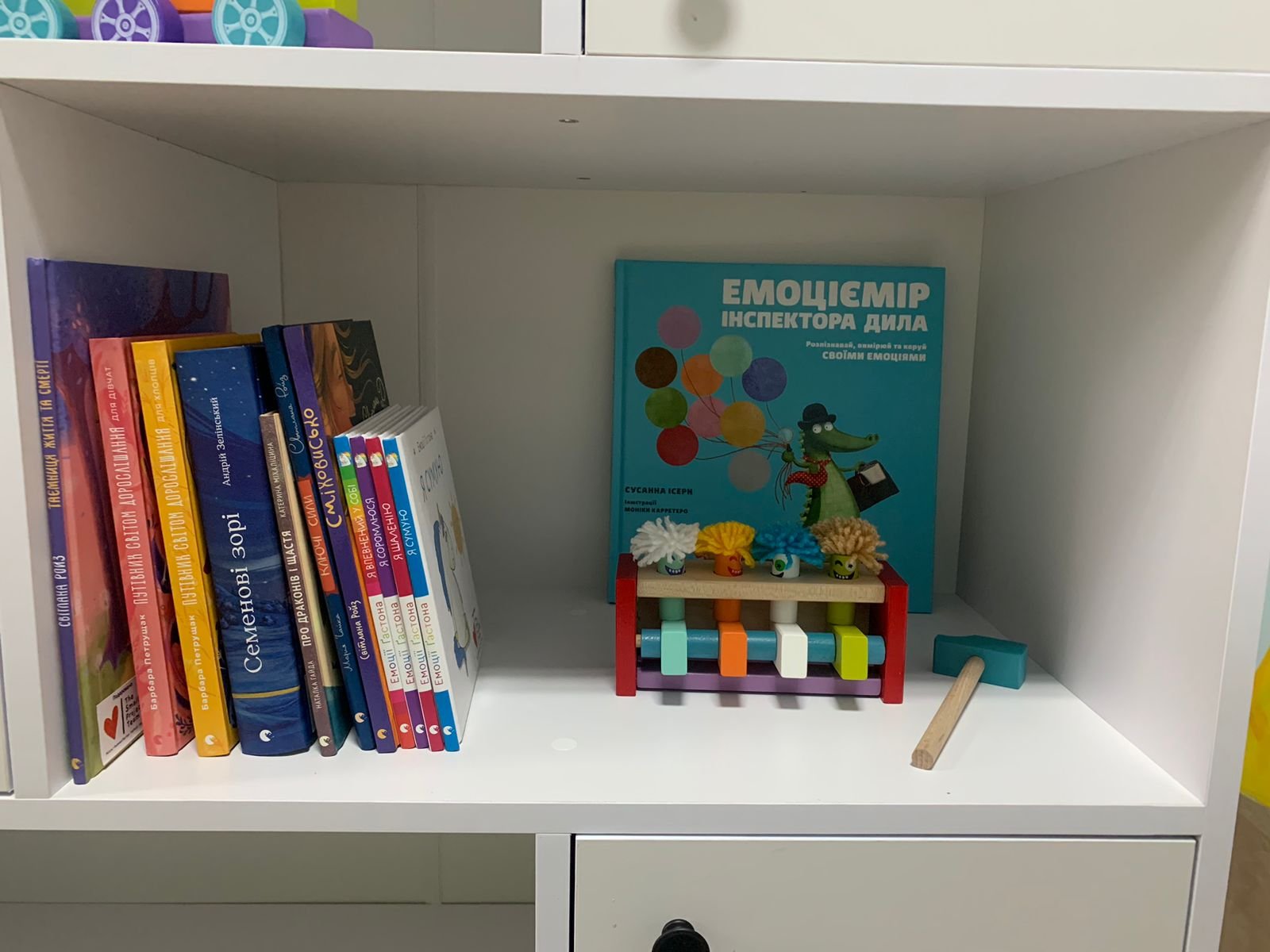
Every book and toy in the Hatka is chosen with purpose — Ukrainian stories for comfort, sensory tools for expression, and playful materials that help children feel safe enough to open up.
What mattered most wasn’t the toys themselves, but what they represented.
In many Ukrainian hospitals, psychologists and child-life specialists work with almost no materials. They improvise every day. They deserve real tools — not just good intentions.
So every item in a Hatka had to meet three criteria:
Ukrainian-made
Curiosity-driven
Useful for therapeutic work
A puzzle becomes a cognitive tool. A board game becomes a regulation exercise.
We were quietly building therapeutic toolkits disguised as play.
Three days from idea to reality
Once the concept was clear, everything accelerated.
We sourced items, coordinated logistics, talked to suppliers — and on International Children’s Day, we installed the very first Tsikava Hatka at the National Institute of Neurosurgery in Kyiv.
I arranged books by age, placed toys by therapeutic purpose (even if they looked like colourful fun to the kids), made sure everything was accessible. The staff watched this little house forming and I could see relief in their faces — they already knew how they’d use it.
And then the Hatkas began appearing across Ukraine.
29 Tsikava Hatkas across the country
From that first installation, the project grew quickly.
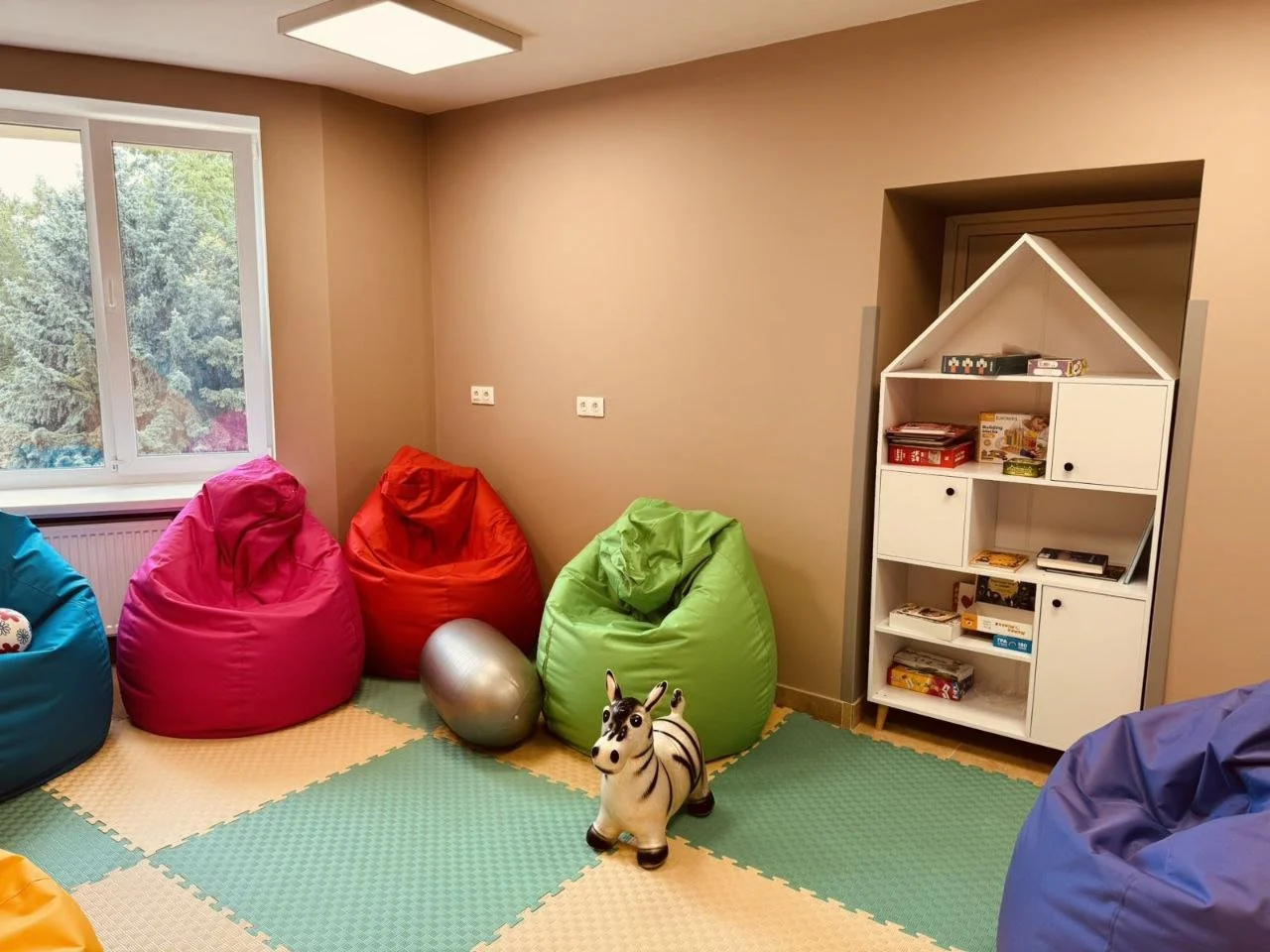
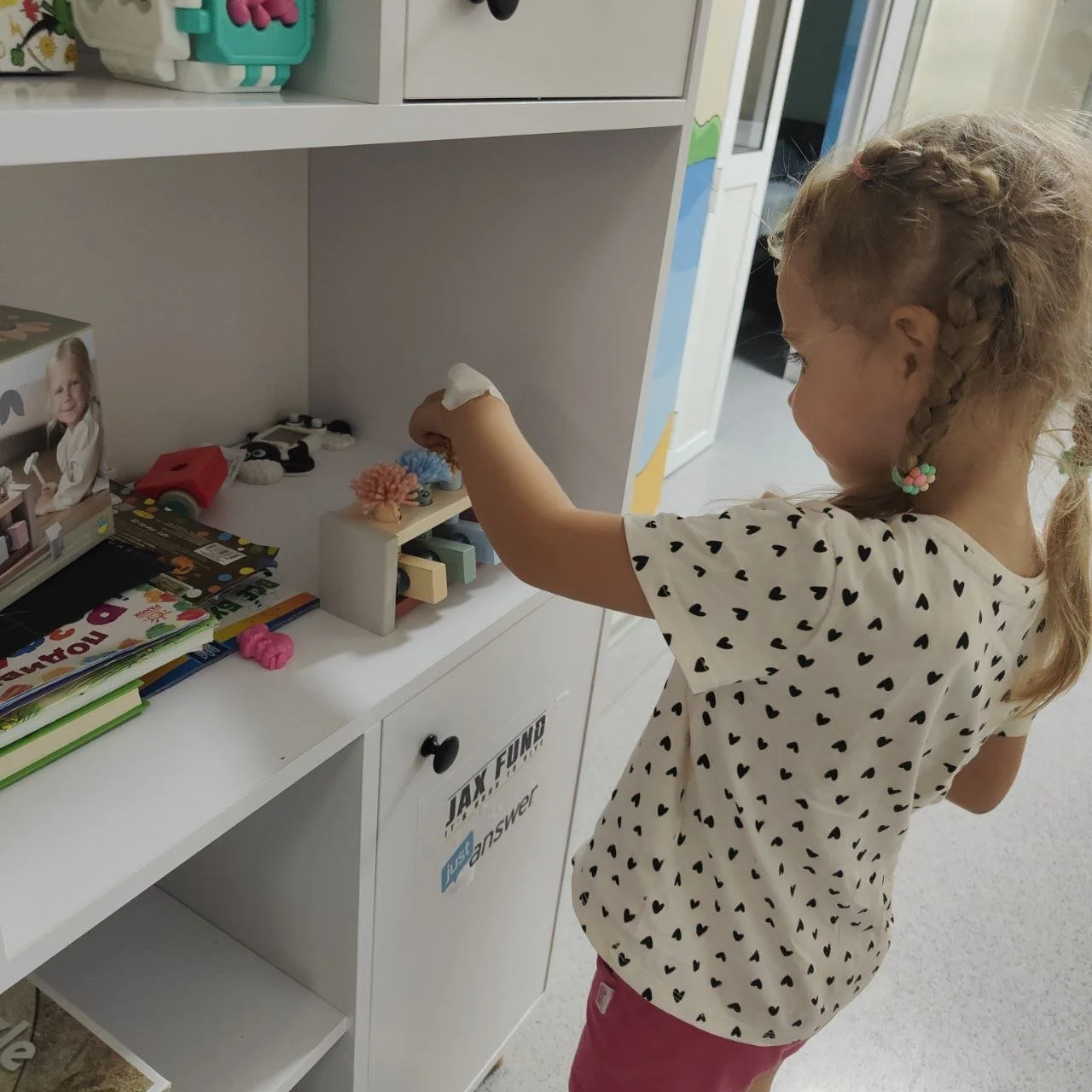
Today, there are 29 Hatkas in pediatric hospitals across Ukraine — in Kyiv, Bilhorod-Dnistrovskyi, Ternopil, Kramatorsk, Dnipro, Konotop, Kremenchuk, Kherson, and more.
Each one follows the same idea, but adapts to local needs.
Some hospitals need more sensory toys. Some need more books. Some need quiet activities for children undergoing long treatments.
Every Hatka is a small house, but a big shift.
It wasn’t just fast — it was collective
The Small Projects Team made the project possible.
But the Ukrainian part of the work — the installations, the logistics, the “how do we make this work here and now?” — simply wouldn’t have happened without local support.
Partners like TatoHub, Smilyva Ukraina, UA First Aid Volunteers, BursaHub, and many others helped us bring Hatkas into their cities and hospitals with openness and care.
And sometimes impact looks like something very simple — like my friend Tolya helping me carry heavy boxes from Nova Poshta, smiling and saying, “Let’s keep going, it’s for the kids.”
Projects like this live on teamwork, trust, and people who show up.
What stayed with me
What I love most about Tsikava Hatka is how naturally it moved. No bureaucracy. No endless approval chains. Just a need, a solution, and a team willing to act quickly.
This is why I love working with The Small Projects Team: when something is necessary and possible, they don’t wait.
Tsikava Hatka isn’t a large-scale intervention. It’s a small wooden house filled with possibility — a space where children can feel curious again and where psychologists finally have tools they deserve.
Sometimes healing begins with something as simple as that.
